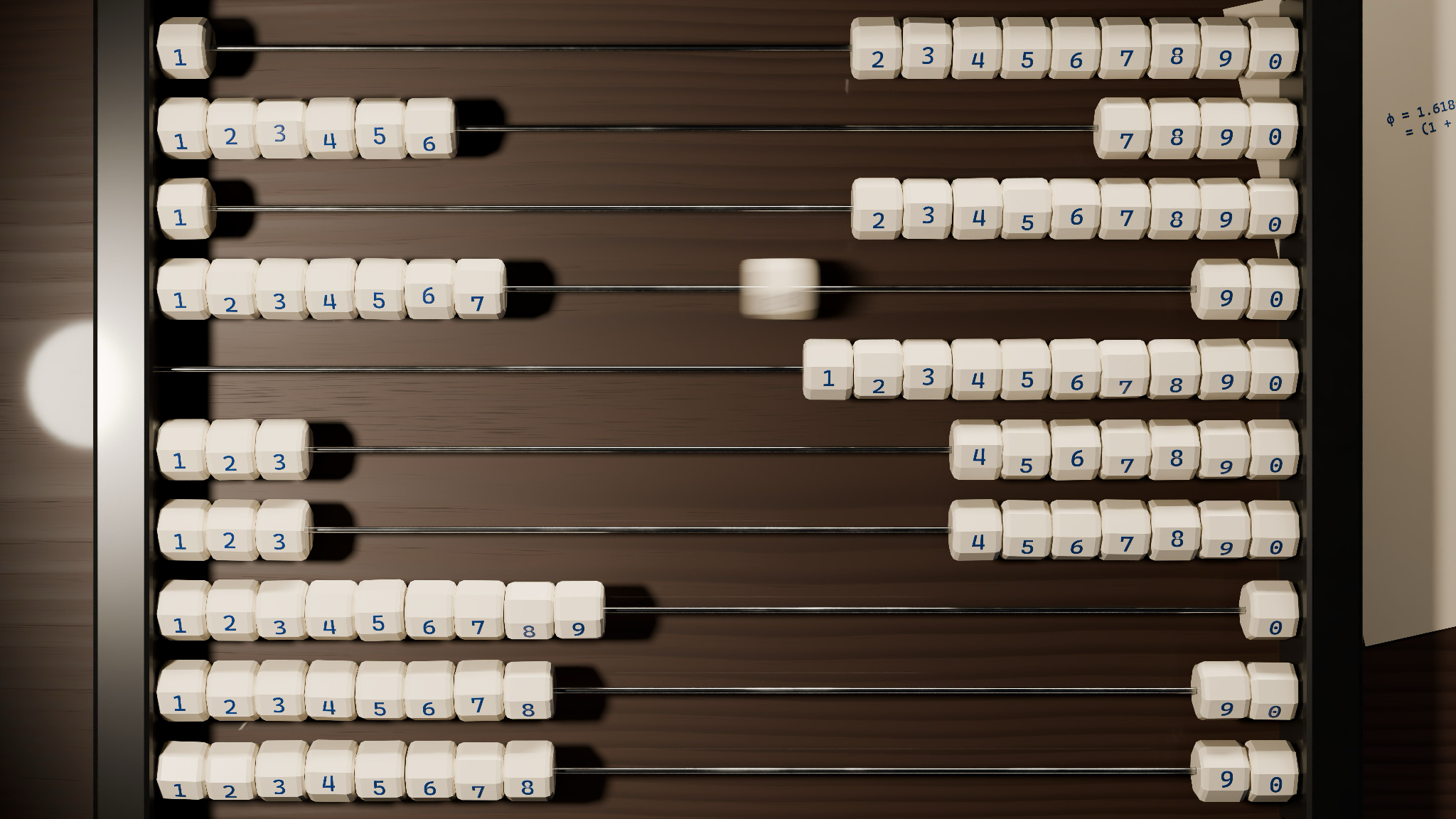
Imagine being asked to add every number from 1 to 100. You could add them one by one. Or you could pair 1 with 100, 2 with 99, and so on: fifty pairs, each totaling 101. The answer is 5,050. The problem has not changed, but a different perspective has made the solution almost immediate.
Our research begins with a similar question: could artificial intelligence solve difficult problems more effectively by changing how it represents them, rather than simply reasoning for longer from the same perspective?
Beyond thinking in words
One established way to improve a language model’s reasoning is to ask it to produce intermediate steps before answering. Known as “chain of thought,” this resembles a student writing out a solution. But must the search for a solution happen entirely through words? [1]
Inside a language model, information is encoded in numerical states within what researchers call a “latent space.” Each latent state corresponds to an internal representation of information about the problem, helping determine what the model generates next. We can think of shifting that representation as changing the perspective from which the model approaches it. [2,3]
Consider the arithmetic example: spotting the pairs does not simply add another step. It reorganizes the problem, making a useful pattern easier to see. Our idea is to search for similarly helpful shifts by adjusting the model’s latent states.
Giving the search a direction
Our method, LatentSeek, puts this idea into practice. The system generates an answer, evaluates it, and uses that feedback to adjust selected latent states before trying again. A mathematical technique called policy gradient estimates whichadjustments will make higher-scoring answers more likely. We call this approach “value-guided” because a measure of answer quality gives the search a direction. The model still produces text; the difference is that we also search directly within the numerical representations that guide its response. [2]
Importantly, the model’s trained parameters remain unchanged. We adjust its temporary state for the current problem, rather than retraining it. Think of revising a sketch to solve a geometry problem, rather than relearning geometry. [2]
In our mathematics experiments, LatentSeek improved accuracy across several model families. Additional optimization steps could further improve performance, while experiments using reliable correctness feedback showed greater gains. [2]
Our related method, GradCuit, explores where inside the model these adjustments should happen. It places adjustable states within an intermediate layer, allowing feedback from the generated response to guide them more directly. Across a range of language models and reasoning benchmarks, it achieved higher average accuracy than standard chain-of-thought prompting. [2]
The promise of a better perspective
The mathematician Alexander Grothendieck imagined understanding as a rising sea, gradually surrounding what once seemed impenetrable. In Récoltes et Semailles, he wrote, as translated by Colin McLarty: “the sea advances insensibly in silence … yet it finally surrounds the resistant substance.” His vision was to build a broader mathematical world in which the original problem could dissolve into something simpler. [4]
Our broader ambition is to give AI something of this power: to discover representations in which even the most formidable problems yield to simple, intuitive steps. In such a representation, a solution would no longer seem like a distant destination reached through exhausting calculation. It would emerge naturally from the way the problem is seen.
Return to the numbers from one to a hundred. The pairs were there all along. What changed was the perspective that brought them into view. We hope to give AI the ability to search for such moments of clarity, to discover ways of seeing that make the difficult feel natural, and perhaps reveal patterns we have not yet imagined.
The dream is not merely to build machines that think longer, but to help them discover the simplicity we have not yet learned to see.